

 Content Menu

 Search
 HOME
HOME
CSR
Why do trains operate at reduced speeds, or remain under suspended operation, even after an earthquake has ended?
If an earthquake is detected that reaches the specified regulation limit, or if the train crew become aware of an earthquake through sensory perception, trains are immediately stopped, after which operation is continued at reduced speeds or suspended, depending on the situation. Safety checks must also be performed at any areas requiring inspection when an earthquake that reaches the specified regulation limit occurs. Utilizing experiences from the wake of the Great Hanshin–Awaji Earthquake and other recent large earthquakes, JR-West has been dedicated to establishing countermeasures such as seismic reinforcement construction. However, extensive equipment inspections are still required following an earthquake, and sometimes equipment may be damaged. This means that it may take the trains some time before the normal operation schedule is restored. Safe operation is ever our top priority. We appreciate your understanding in this matter.
Earthquake Disaster Countermeasures
To mitigate damage caused by an earthquake, JR-West promotes the following initiatives.
Seismic reinforcement
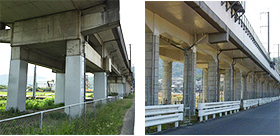
Seismic reinforcement measures being implemented include collapse prevention measures for bridges and station sheds as well as reinforcement work on embankments, steel bridge piers, and viaducts.
Viaduct reinforcement construction, for example, includes wrapping steel sheets around and reinforcing supports using steel wire.
Derailment disaster countermeasures
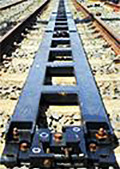
JR-West has installed derailment-prevention guards along the Sanyo Shinkansen Line. These guards are designed to prevent the wheels of the train from excessive deviation in the event of derailment by the wheels hitting the guard.
Tsunami countermeasures
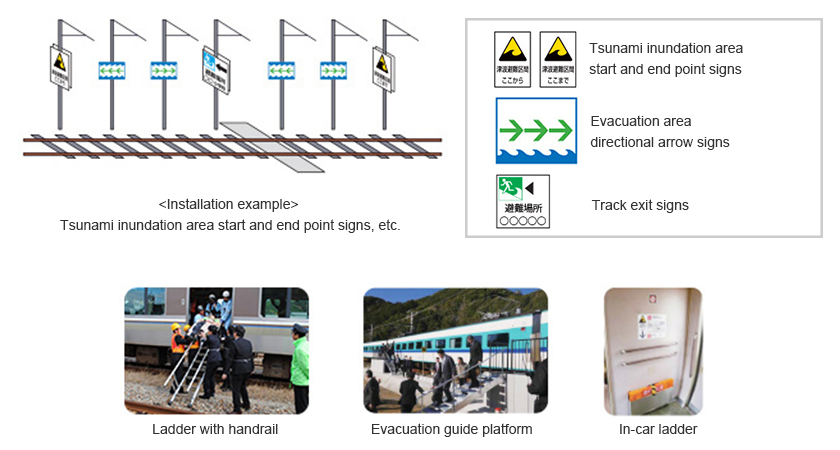
In addition to creating hazard maps for line sections based on the assumed tsunami inundation effects for a given prefecture, JR-West’s tsunami countermeasures include establishing tsunami inundation area start and end points in flood-danger areas, thus facilitating prompt evacuation. Other countermeasures include ladders with handrails that can be installed on train cabs, regular maintenance of evacuation guide facilities (including evacuation guide platforms), and equipment of evacuation ladders that can be handled by passengers in train cars.
Operation Resumption Flow Chart
 Seismic activity reaches the specified regulation limit
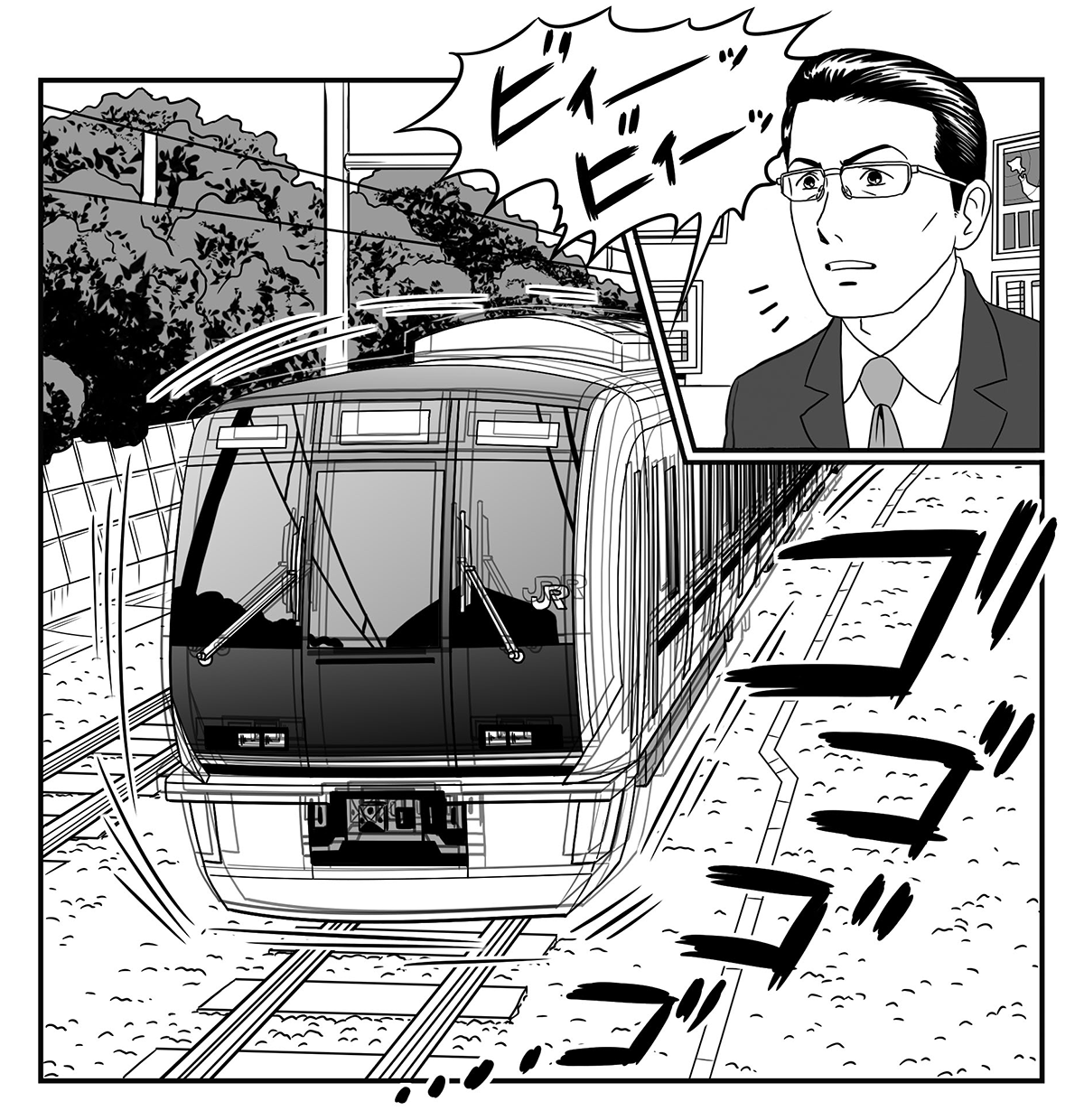
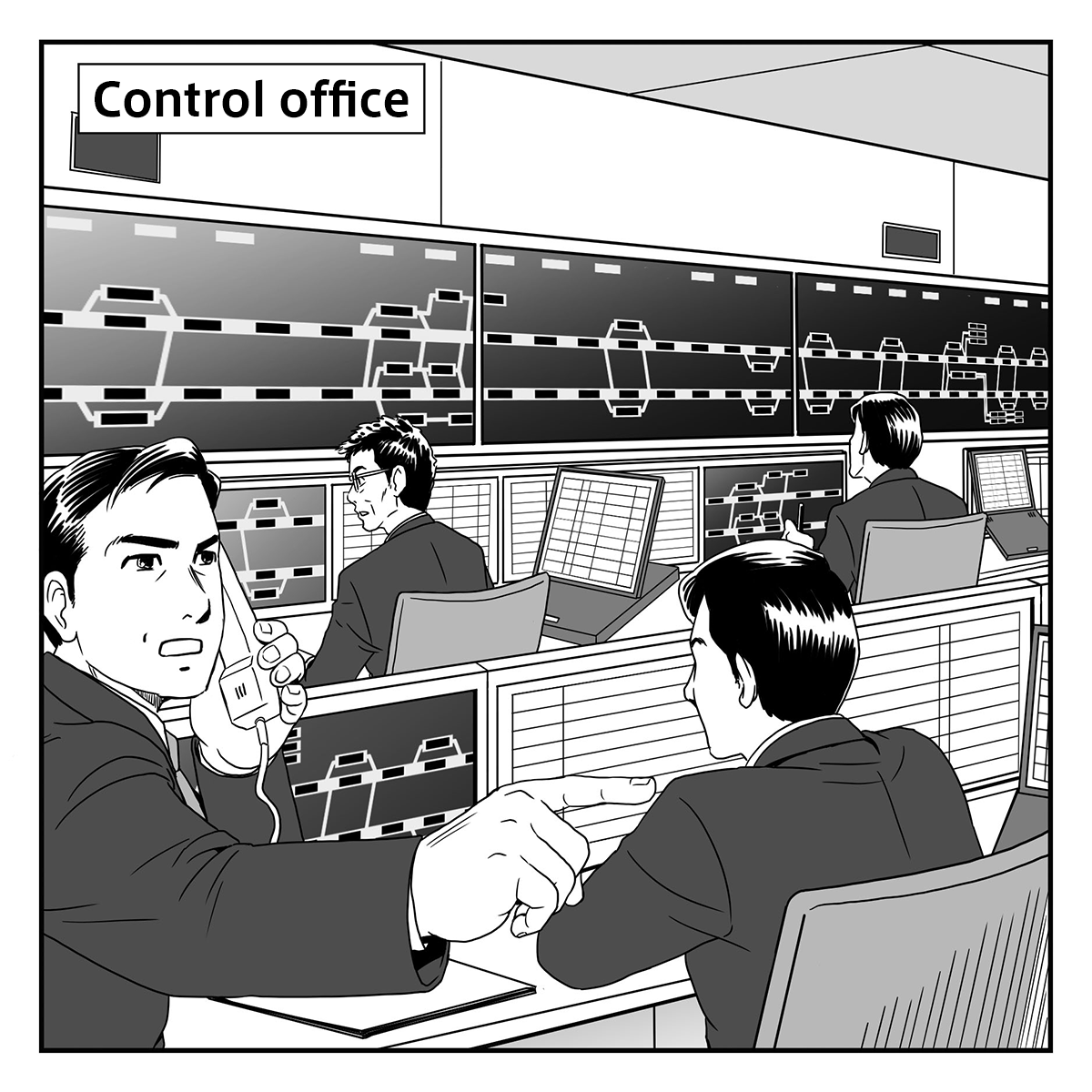
When an earthquake that reaches the specified regulation limit occurs, information is sent to the control office managing trains and train operation, and the control office will immediately stop the trains.
 Operation is suspended for required sections
Seismic activity that reaches the regulation limit indicates an increased risk of viaduct and track collapses, so all train operations will be temporarily suspended.
 Inspection of tracks and trains is performed
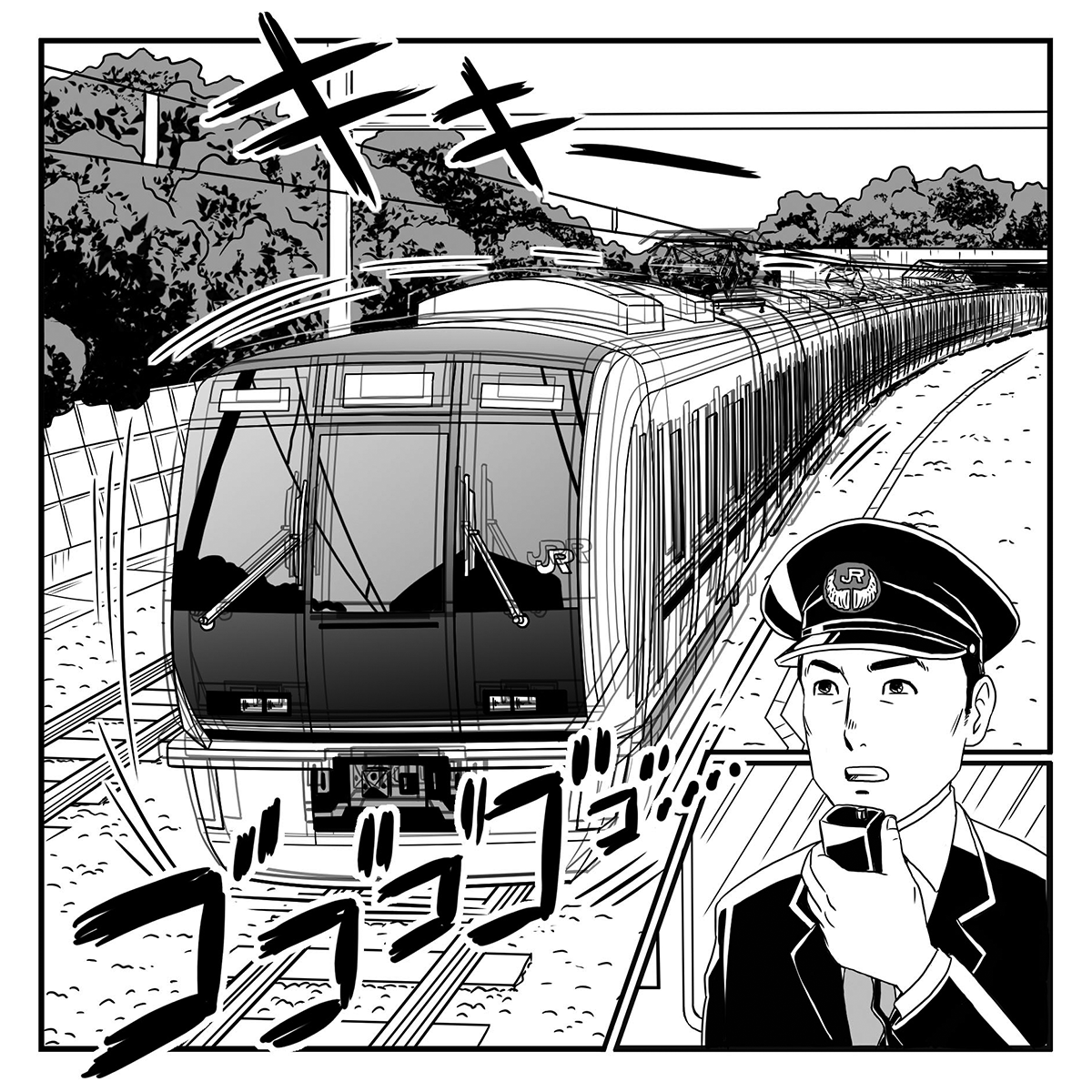
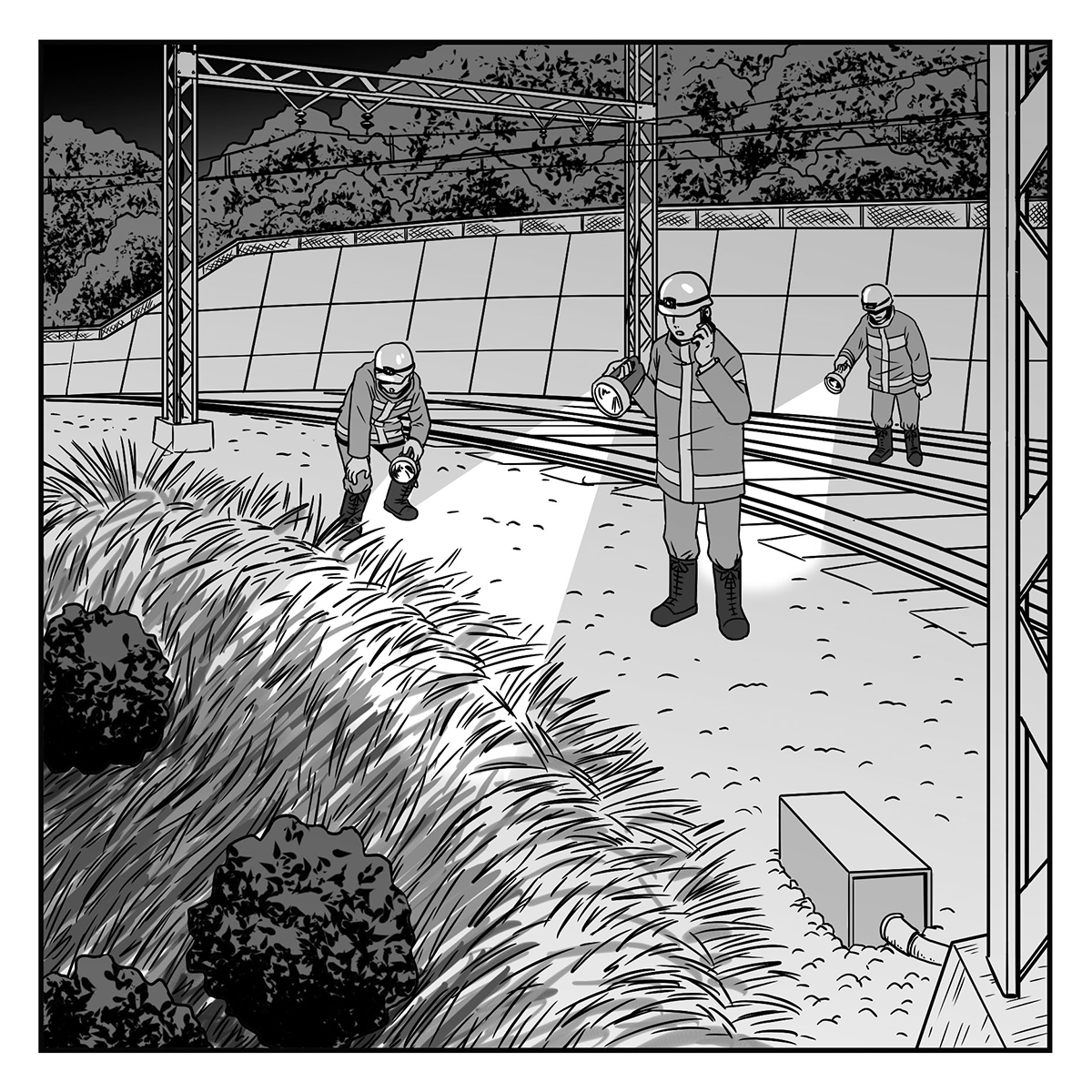
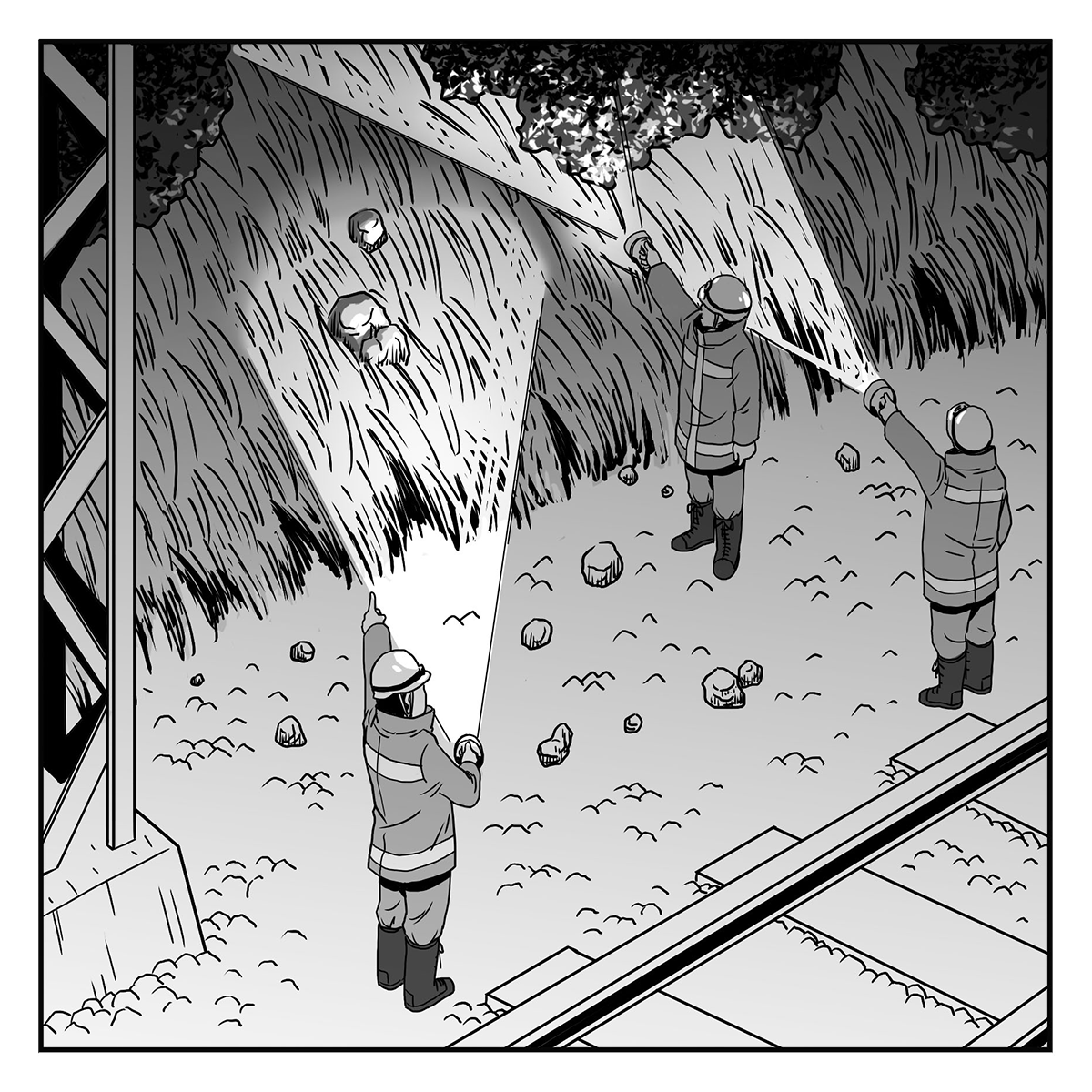
Depending on the situation, trains will be operated at a slower speed while an engineering department official in charge of track maintenance visually inspects the tracks for safety, and train crew will inspect the train for any abnormalities.
 Arrangements are made to restart operation
After an engineering department official completes inspection of the necessary sections and confirms that no abnormalities have occurred, they will contact the control office. The control office will then instruct the trains to resume operation while also providing the necessary information for train operation ordering and specific instructions for certain sections.
 Trains return to normal operation schedules
As train operation resumes, railway staff will strive to restore the normal operation schedule as quickly as possible.
Situations where operation over a large area has been impacted, it may take some time before the normal operation schedule is restored.
Depending on the situation, trains may operate at reduced speeds even after operation has resumed.